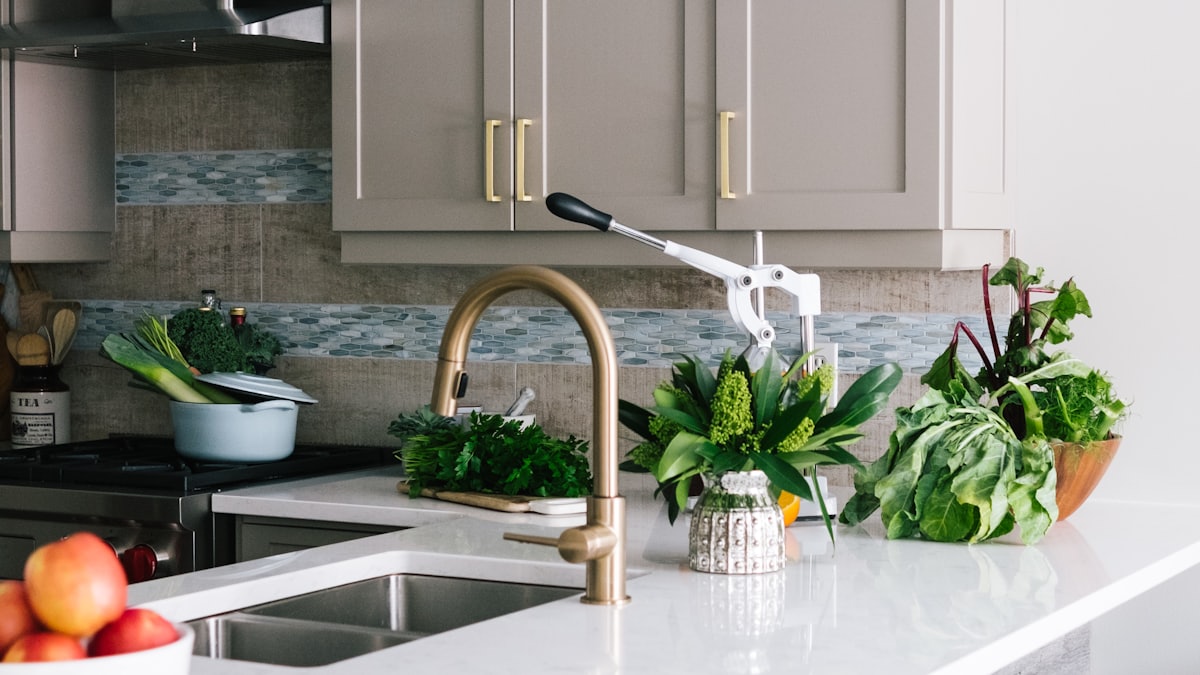
Picture two identical kitchens with the same fittings and the same layout. One feels like a Sunday-morning coffee advert. The other feels like a dentist’s waiting room. The only thing separating them is a four-digit number printed in small type on the bulb box: 2700K against 4000K.
Colour temperature is the highest-impact, lowest-cost decision in home lighting, and it’s also the one people get wrong most often. Usually that’s because the words on the packaging, like “warm”, “cool” and “daylight”, are vague to the point of useless. The numbers are far more reliable. Here’s how to read them and pick the right white for every room.
What colour temperature actually means
Colour temperature is measured in Kelvin (K), and the scale runs the opposite way to how it sounds. Lower numbers are warmer and more orange, like a candle. Higher numbers are cooler and more blue, like an overcast midday sky. Warm white usually means 2700K to 3000K, cool white means around 4000K, and anything labelled “daylight” sits at 5000K or above.
| Kelvin | What it looks like | Best for |
|---|---|---|
| 2200K | Candlelight, vintage filament | Feature bulbs, snugs, restaurants |
| 2700K | Classic warm white, the old 60W bulb | Bedrooms, living rooms, dining |
| 3000K | Soft warm white, a touch crisper | Kitchens, bathrooms, hallways |
| 4000K | Cool white, noticeably brighter and bluer | Home offices, garages, utility rooms |
| 5000K+ | “Daylight”, a clinical blue-white | Commercial and security, rarely homes |
The best colour temperature for each room
Ask what the room is mainly for. If it’s for relaxing, go warm. If it’s for doing things, go a little cooler. In practice, that gives you a simple UK home starting point:
- Living rooms and bedrooms: 2700K to 3000K. 2700K is the cosiest, 3000K is the most popular all-rounder in British homes.
- Kitchens: 3000K as standard, or 4000K if you like a crisp, bright worktop and don’t mind a cooler look.
- Bathrooms: 3000K flatters skin and still gives accurate colour for shaving and makeup. See our bathroom lighting zones guide for the safety side.
- Home offices, garages and utility rooms: 4000K, where alertness and clarity matter more than cosiness.
- Dining tables: 2700K. Warm light makes food look better and flatters everyone at the table, which is why nearly every restaurant uses it.
Why “warm white” on the box isn’t enough
One brand’s “warm white” is 2700K, another’s is 3000K, and a bargain-bin brand’s could be anything. If you’re buying bulbs or fittings from different ranges for the same room, match the Kelvin number rather than the words. It’s printed on every box, usually right after the wattage.
CRI: the number that decides how good colours look
Colour Rendering Index (CRI) measures how faithfully a light shows colours, out of 100. Old incandescent bulbs were effectively 100. Good LEDs now reach 90 or higher, while cheap ones sit around 80, which is why some LED-lit rooms make food, skin and wood look slightly grey and lifeless. For kitchens, bathrooms and anywhere you look in a mirror, choose CRI 90 or above. It’s worth the extra pound or two per bulb.
Can’t decide? Dim it instead
Two options give you flexibility if you don’t want to commit to a single number:
- Dim-to-warm LEDs mimic old filament bulbs. At full brightness they sit around 2700 to 3000K, and as you dim them they drift warmer, down towards candlelight. Lovely in living and dining rooms.
- Tunable white smart bulbs let you set any temperature from an app or a scene, so you can have 3000K while you cook and 2200K while you eat. The good ones are indistinguishable from fixed bulbs. Our smart home starter guide covers where to begin.
See it before you commit
Every lighting bay in our showrooms has switchable temperature demos, so you can see the same fitting at 2700K, 3000K and 4000K side by side. It takes about ten seconds of looking to know which one your room wants. If you’re also working out quantities and spacing, read how many downlights you need next.